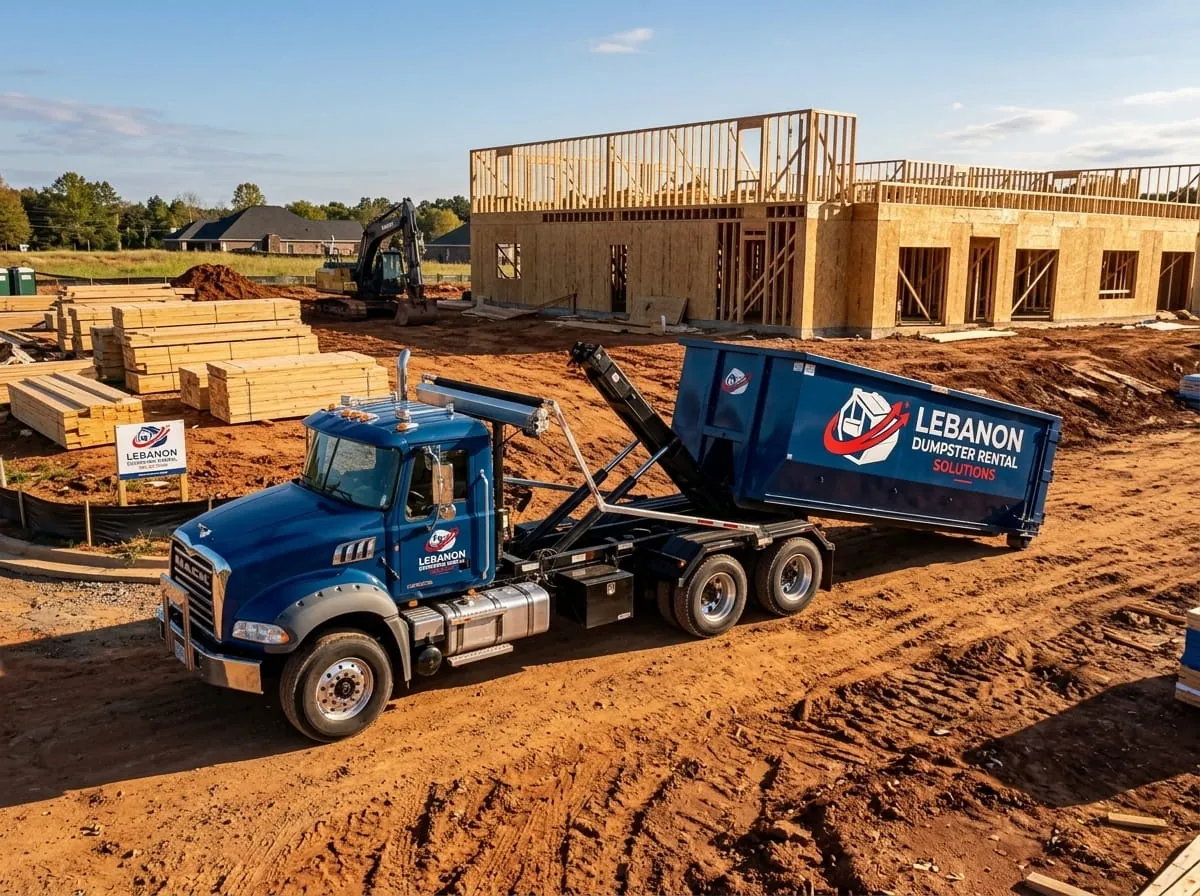
A roll-off dumpster is one of the most useful tools you can have on a job site or in your driveway, but a fully loaded container can weigh several tons, and the truck that delivers it weighs a great deal more. That combination of weight and steel rolling across your driveway is exactly why so many homeowners in Lebanon call us worried about scratches, gouges, or cracks after a rental. The good news is that driveway damage is almost entirely preventable when you understand how it happens and take a few simple steps before the truck arrives. As a local hauler working across Wilson County, we protect driveways on every delivery, and we want you to know how it works so you can rent with confidence.
The most important thing to understand is that damage does not come from the dumpster sitting on your driveway. It comes from three specific moments: the concentrated weight of the container's steel wheels and feet pressing into the surface, the drag as the box rolls off and back onto the truck bed, and the effect of heat on asphalt during a hot Middle Tennessee summer. Once you know those three risk points, protecting your driveway becomes straightforward.
Let's start with weight distribution, because it is the single biggest factor. A roll-off dumpster does not rest flat on your driveway like a car. It sits on a small number of steel contact points: the rear wheels and the front feet or rails. All that tonnage funnels down through those few square inches of steel. On a soft or warm surface, those points can press in, leaving dents or scuffs. The fix is simple and it is what every careful hauler does: we place boards, plywood, or planks under the wheels and feet to spread the load across a much larger area. Think of it like a snowshoe. The same weight spread over more surface area dramatically reduces the pressure at any one point, and that is what keeps your concrete or asphalt looking the way it did before we showed up.
Plywood is the workhorse here. A sheet of three-quarter-inch or thicker plywood under each wheel and each front foot creates a buffer between steel and surface. For heavier loads or softer surfaces, we sometimes double up the boards or use solid dimensional lumber like two-by-tens. If you are arranging protection yourself before we arrive, a few sheets of scrap plywood laid where the container will rest go a long way. We are always happy to talk through the specific placement for your driveway when you contact us to schedule.
The second risk point is the roll-off action itself. This is where the container's name comes from: the box literally rolls off the back of the truck on rollers and rails, then gets winched back up at pickup. During that motion, the trailing edge of the box can drag across the driveway. A skilled driver controls the speed of this so the box eases down rather than slamming, and the boards under the contact points also cushion the landing. If your driveway has a slope, the direction the truck faces and the angle of the drop matter, which is why an experienced local driver who knows Lebanon driveways is worth a great deal.
The third factor is one that catches a lot of people off guard: heat. Asphalt is not a rigid material like concrete. It is a flexible blend of aggregate and bitumen, and bitumen softens as it warms. During a Middle Tennessee July or August, a blacktop driveway that has been baking in the afternoon sun can be soft enough that even a well-supported dumpster leaves impressions. This is the number one cause of asphalt driveway marks we see. If you are renting during the hot months and you have an asphalt surface, a few extra precautions help enormously: schedule delivery for the morning when the surface is cooler, always use boards under every contact point, and consider not leaving the container in one spot for the full rental if you can avoid it. Asphalt that is cool and shaded is far more forgiving than asphalt that has soaked up a full day of summer sun.
Different driveway materials call for different levels of caution. Here is how the common Wilson County surfaces stack up:
- Gravel: The most forgiving surface. Gravel does not scratch or crack, and it can handle the weight well as long as the base is firm. The only downside is that heavy wheels can create ruts in loose gravel, but this is cosmetic and easily raked out. Gravel driveways rarely need boards, though we still use them on soft or freshly graded gravel.
- Concrete: Very durable and the most common driveway surface we deliver to. Cured concrete resists dents and heat, but it is not immune. The real risks with concrete are surface scratching from the roll-off drag and, in rare cases with older or thin slabs, cracking under concentrated point loads. Boards under the wheels and feet solve both concerns for the vast majority of driveways.
- Pavers: The most delicate option. Interlocking pavers can shift, crack, or sink individually under concentrated weight, and once one paver drops, the whole area looks uneven. We strongly recommend a full plywood platform under the entire footprint of the container on pavers, not just spot boards, so the load is spread evenly across many pavers at once. If you have a decorative paver driveway, it is often smarter to place the dumpster on an adjacent concrete pad, in the yard, or on the street instead.
- Asphalt: Durable but heat-sensitive, as discussed above. Always use boards, and mind the temperature.
Positioning is your other big lever, and it costs nothing. Before the truck arrives, think about where the container will do the least harm and be the most useful. A flat, firm section of driveway is ideal. Avoid placing the box over expansion joints, existing cracks, drain covers, or the thin edges of a slab where the concrete is weakest. Keep it clear of anything you care about, like a decorative border or a newly sealed section. If your driveway is short or the surface is precious, remember that the container does not have to sit on the driveway at all. Many Lebanon homeowners place the dumpster in the yard on a bed of plywood, or on the street. Just be aware that street placement may require a permit, and we cover exactly how that works in our guide on whether you need a permit for a dumpster in Lebanon.
Choosing the right size container also protects your driveway, and it is a point people miss. A smaller dumpster weighs less when full and concentrates less load on your surface. If your project genuinely fits in a compact container, a 10-yard dumpster or a 15-yard is gentler on a driveway than a large box, and it also tucks into tighter spots more easily. On the other hand, cramming a heavy dense load like concrete, dirt, or roofing shingles into an undersized container can push it to its weight limit fast. If you are unsure what capacity your job calls for, our breakdown of what size dumpster you need walks through it, and we are glad to advise when you book.
So what does a good hauler actually do to prevent damage? When we handle a delivery, protection is built into the process rather than treated as an add-on. Our drivers assess the surface and slope before dropping the box. We carry and place boards under the wheels and feet as standard practice. We control the roll-off speed so the container settles gently instead of slamming down. We take the temperature and material of your driveway into account, especially in summer. And we place the box where you want it, thinking about weight, joints, and the roll-off path rather than just dropping it in the first open spot. When you rent from a company that treats your property with care, driveway protection is not something you have to worry about on your own. You can see the full range of what we offer on our services page, including our roll-off dumpster rental options for homes and job sites across Lebanon.
A few final homeowner tips pull it all together. First, do a quick walkthrough with the driver at delivery so you both agree on placement. Second, if you are loading heavy debris, distribute it evenly in the container rather than piling it all on one end, which keeps the load balanced over the boards. Third, keep an eye on the surface during the rental, especially in a heat wave, and let us know if you have any concerns. And fourth, when in doubt, ask. We would much rather answer a question before delivery than solve a problem after. A little planning around weight, positioning, boards, and heat is all it takes to enjoy the convenience of a roll-off dumpster and hand your driveway back exactly as you found it.
Ready to rent with your driveway protected from the first minute? Call Lebanon Dumpster Rental Solutions at (615) 257-9262 and we will help you pick the right size, plan the placement, and set up the boards so your concrete, asphalt, or pavers stay in great shape from delivery to pickup.

Founder, Lebanon Dumpster Rental Solutions — sharing straight advice from more than 15 years of local hauling experience.
Frequently Asked Questions
Will a dumpster damage my concrete driveway?
It should not if it is set up correctly. Cured concrete is durable, but the container's weight funnels through a few steel contact points. Placing plywood or boards under the wheels and feet spreads that load and prevents scratches or dents. A careful hauler does this on every delivery, so cracking is rare on a sound slab.
Why do you put boards or plywood under a roll-off dumpster?
Boards spread the container's concentrated weight over a much larger area, like a snowshoe. Instead of tons pressing through small steel wheels and feet, the load is distributed across the plywood, which protects the surface from denting, scratching, or cracking. They also cushion the box as it rolls off the truck.
Can a dumpster damage asphalt in hot weather?
Yes. Asphalt softens as it heats, and a Middle Tennessee summer afternoon can make a blacktop driveway soft enough to take impressions even under a supported dumpster. Schedule delivery in the cooler morning hours, always use boards under every contact point, and avoid leaving the box baking in one spot all season.
What driveway surface handles a dumpster best?
Gravel is the most forgiving since it will not scratch or crack. Concrete is durable and handles containers well with boards. Asphalt is fine if you mind the heat. Pavers are the most delicate and can shift or crack, so we recommend a full plywood platform or placing the dumpster elsewhere.
Do I have to put the dumpster on my driveway?
No. You can place it in the yard on a bed of plywood or on the street, though street placement may require a permit in Lebanon. If your driveway is short, sloped, or a decorative paver surface, an alternate spot is often the safest choice. We help you decide the best location at booking.