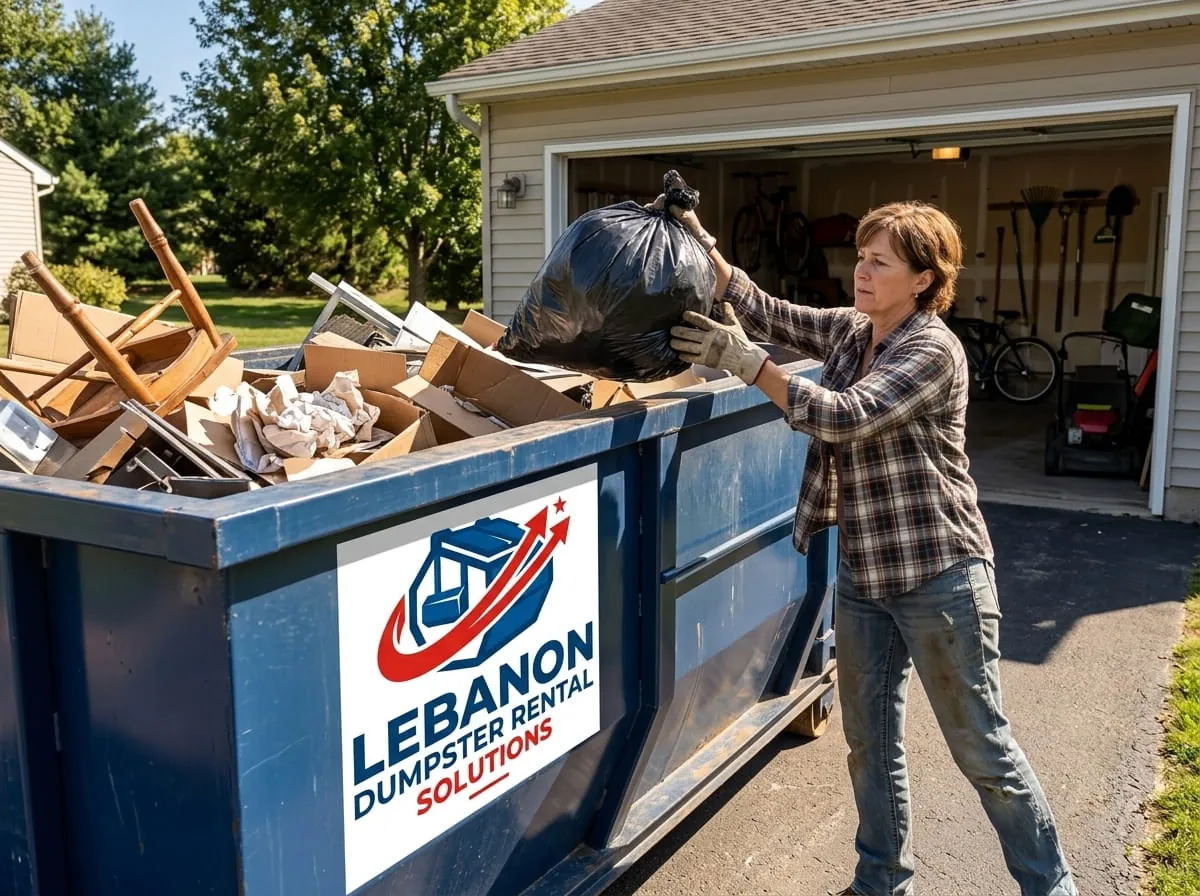
After enough years hauling roll-off containers around Lebanon and the rest of Wilson County, you learn that the single biggest source of surprise fees and delayed pickups isn't the size of the dumpster people rent, it's what ends up inside it. Most folks assume a dumpster is a no-questions-asked hole you can throw anything into. It isn't. Landfills, transfer stations, and the state of Tennessee all have rules about what's allowed, and when a prohibited item shows up in a load, it can get the whole container rejected at the gate. That means the truck comes back to you, and now you're paying to sort it out. So let's walk through what actually belongs in a dumpster, what never does, and what to do with the stuff that gets turned away.
The good news first: the overwhelming majority of what you want to get rid of is completely fine. General household junk, furniture, mattresses, carpet and padding, non-hazardous remodeling debris, and yard waste all go in without a second thought. If you're cleaning out a garage, gutting a bathroom, or clearing brush after a storm, you're squarely in allowed territory. Here's a quick rundown of the everyday materials that are always welcome in a standard roll-off.
- Household junk and furniture — couches, tables, chairs, dressers, mattresses, box springs, toys, clothing, and general clutter from a cleanout.
- Construction and demolition debris — drywall, lumber, plywood, trim, cabinets, countertops, flooring, tile, insulation, and roofing shingles.
- Yard and landscaping waste — branches, brush, leaves, sod, small stumps, and general green debris (check with us first on very large volumes).
- Bagged household trash — the ordinary garbage that piles up during a big project or a move.
- Heavy materials in limited amounts — concrete, brick, block, asphalt, dirt, and gravel, but only when you rent a container rated for it. More on weight below.
Now the part that trips people up. There's a specific list of items that cannot go in a roll-off dumpster, and it isn't us being difficult. These bans come from federal and Tennessee state environmental regulations, and the landfills enforce them hard. When a load hits the scale and an inspector spots a prohibited item, they can reject the entire container. Here are the items you have to keep out, and the honest reason each one is banned.
- Paint, stains, and solvents — liquid paint is considered a hazardous material because it leaches into groundwater and can't be compacted safely. Latex paint that's fully dried out is sometimes acceptable, but wet cans are a hard no.
- Tires — they trap methane, float to the surface of a landfill over time, and are a fire hazard. Tennessee bans them from landfills entirely and funds a separate recycling program for them.
- Batteries — car batteries, lithium-ion packs, and rechargeables all contain corrosive acids and heavy metals. Lithium batteries are also a genuine fire risk when they're crushed in a compactor or a truck.
- Appliances with Freon — refrigerators, freezers, air conditioners, and dehumidifiers contain refrigerant gases that are illegal to release into the atmosphere under the Clean Air Act. The Freon has to be professionally evacuated first.
- Hazardous and household chemicals — pesticides, herbicides, pool chemicals, motor oil, antifreeze, gasoline, propane tanks, and cleaning solvents. All of these are toxic, flammable, or reactive.
- Electronics (e-waste) — TVs, monitors, computers, and printers contain lead, mercury, and other heavy metals. Tennessee steers these into dedicated recycling channels rather than the landfill.
- Medical and biohazard waste — sharps, needles, and anything contaminated needs specialized handling and never goes in a general container.
- Asbestos — if you're working on an older Lebanon home and suspect asbestos in old insulation, tile, or siding, stop and get it tested. It requires a licensed abatement contractor, full stop.
The reason we're so firm about this list is that we're the ones standing at the landfill gate when the load gets inspected. A single old paint can or a car battery buried in a load of drywall can get the whole thing turned away, and then that container is coming back to your driveway. It's genuinely faster and cheaper for everyone to pull those few items out on the front end. If you're ever unsure whether something qualifies, a quick call to us at (615) 257-9262 settles it in thirty seconds.
Weight is the other thing people underestimate, and it deserves its own conversation. Every dumpster has both a volume limit and a weight limit, and they're two separate things. You can fill a large container only a third full and still blow past its tonnage cap if you're loading the wrong material. The usual culprits are concrete, brick, dirt, gravel, roofing shingles, and wet debris. A cubic yard of concrete weighs well over two tons, so a big roll-off packed with it would be far too heavy for the truck to legally haul and would destroy the axles.
That's why we handle heavy debris differently. For clean concrete, asphalt, brick, block, and dirt, we use smaller dedicated containers and dumpsters rated specifically for that weight. It keeps you legal on the road and keeps your bill predictable, because you're not getting hit with overage charges on a container that was never built to hold that much mass. If your project involves a torn-out patio, a demolished foundation, or a driveway, talk to us about concrete and heavy debris service before you order, and we'll match you to the right container instead of the biggest one. A common mistake is renting a 20 or 30 yard box for a concrete job and only being able to fill it a quarter of the way. For a general remodel with mixed debris, on the other hand, a 20 yard dumpster is usually the sweet spot for a Wilson County home.
Mixing loads is where the two rules collide. If you've got a genuine mix of light household junk and a little heavy material, that's fine within reason, but keep the heavy stuff off to one side and let us know it's in there. The problem comes when someone quietly loads several hundred pounds of tile or old shingles under a layer of furniture and hopes it slides through the scale. It won't. Overweight tickets from the landfill get passed straight through to the customer, and they're never small. Honesty about what's going in the box is always the cheaper path.
So what do you actually do with the banned items? This is the part a lot of companies skip, and it leaves people stuck. Here in Middle Tennessee, most of these materials have a proper, legal, and usually free or low-cost disposal channel. You just have to route them separately from your dumpster.
- Wilson County Convenience Centers — the county operates convenience centers that accept many household materials residents can't put in a roll-off. These are your first stop for a lot of the odds and ends, and hours and accepted-item lists are posted by the county, so call ahead before you drive out.
- Household Hazardous Waste — paint, chemicals, solvents, pesticides, and automotive fluids should go to a household hazardous waste collection. Tennessee runs periodic HHW collection events across the region, and there are permanent drop-off options in the greater Nashville area. Latex paint can often be dried out with kitty litter or a paint hardener and then, once fully solid, disposed of with regular trash in many cases.
- Tires — most tire retailers will take your old tires for a small per-tire fee when you buy new ones, and Tennessee's waste tire program keeps them out of landfills. Never toss them in the dumpster.
- Appliances with Freon — many scrap metal yards and appliance retailers will take a fridge or AC unit and evacuate the refrigerant properly. Some will even do it for free because the steel has scrap value.
- Electronics — retailers and periodic e-waste recycling events accept TVs, computers, and monitors. Check locally in Lebanon and Mt. Juliet for the next collection date.
- Batteries — auto parts stores take car batteries and usually pay a small core credit. Home improvement and electronics stores have drop-off bins for rechargeables and lithium cells.
If reading all that made your cleanout sound complicated, here's the shortcut we offer a lot of customers: let us do the sorting. Our junk removal crews handle the loading, and we know exactly what can and can't ride to the landfill, so the prohibited items get pulled and routed correctly without you having to become an expert in Tennessee waste law. For a straightforward driveway container you load yourself, our residential dumpster rental is simple and honest, and we'll tell you up front what to keep out. Either way, the goal is the same: no rejected loads, no surprise overage tickets, and no illegal dumping.
One last honest word. The temptation to bury a banned item deep in the load and hope nobody notices is real, especially at the end of a long project when you're tired and just want it gone. Resist it. Beyond the risk of a rejected container and a return trip on your dime, illegal disposal of hazardous materials carries real fines in Tennessee, and it's the kind of thing that comes back around. Doing it right is genuinely not much harder, and it's a lot cheaper than doing it wrong.
| Always Allowed | Never Allowed | Weight-Restricted |
|---|---|---|
| Furniture and mattresses | Paint and solvents | Concrete and brick |
| Drywall, wood, flooring | Tires | Asphalt |
| Household junk and trash | Batteries | Dirt and gravel |
| Yard and brush debris | Freon appliances | Roofing shingles |
| Roofing shingles (limited) | Chemicals and e-waste | Wet or dense debris |
Bottom line: dumpsters handle the big, bulky, non-hazardous majority of what your project produces, and there's a clean, legal home for everything else. If you're planning a job in Lebanon or anywhere in Wilson County and you want a straight answer about what your load can hold, reach out. We'd rather spend two minutes on the phone up front than sort out a rejected container later. For related reading, see our guides on disposing of construction debris and recycling and waste disposal in Lebanon, TN. When you're ready to book the right container for your project, call Lebanon Dumpster Rental Solutions at (615) 257-9262 or get in touch here, and we'll set you up right the first time.

Founder, Lebanon Dumpster Rental Solutions — sharing straight advice from more than 15 years of local hauling experience.
Frequently Asked Questions
Can I put paint cans in a dumpster in Lebanon, TN?
No, wet or liquid paint is prohibited because it's classified as hazardous and leaches into groundwater. Latex paint that's been fully dried out with hardener or kitty litter can often go in the trash once solid, but oil-based paints, stains, and solvents must go to a household hazardous waste collection. Call us at (615) 257-9262 if you're unsure.
Why can't appliances like refrigerators go in the dumpster?
Refrigerators, freezers, air conditioners, and dehumidifiers contain Freon and other refrigerants that are illegal to release into the atmosphere under the Clean Air Act. The refrigerant has to be professionally evacuated first. Many scrap yards and appliance retailers will take these units and handle the Freon properly, sometimes for free because of the scrap metal value.
What happens if a banned item gets found in my load?
When a load hits the landfill scale, inspectors check it, and a single prohibited item like a battery or tire can get the entire container rejected. That means the dumpster comes back to your property and you pay to sort it out. It's much faster and cheaper to keep banned items out on the front end, or let our crew load it and handle the sorting for you.
Is there a weight limit on dumpsters, and what counts as heavy debris?
Yes, every container has a weight limit separate from its volume limit. Concrete, brick, dirt, gravel, asphalt, and roofing shingles are heavy enough that you can hit the tonnage cap while the box is only a third full. For those materials we use smaller containers rated specifically for the weight, which keeps you legal and avoids overage charges.
Where do I take items that can't go in the dumpster in Wilson County?
Wilson County convenience centers accept many household materials, tire retailers take old tires, auto parts stores take batteries, and household hazardous waste collections handle paint, chemicals, and automotive fluids. Electronics go to e-waste recycling events. Call ahead for hours and accepted items, or ask us and we'll point you to the right channel.