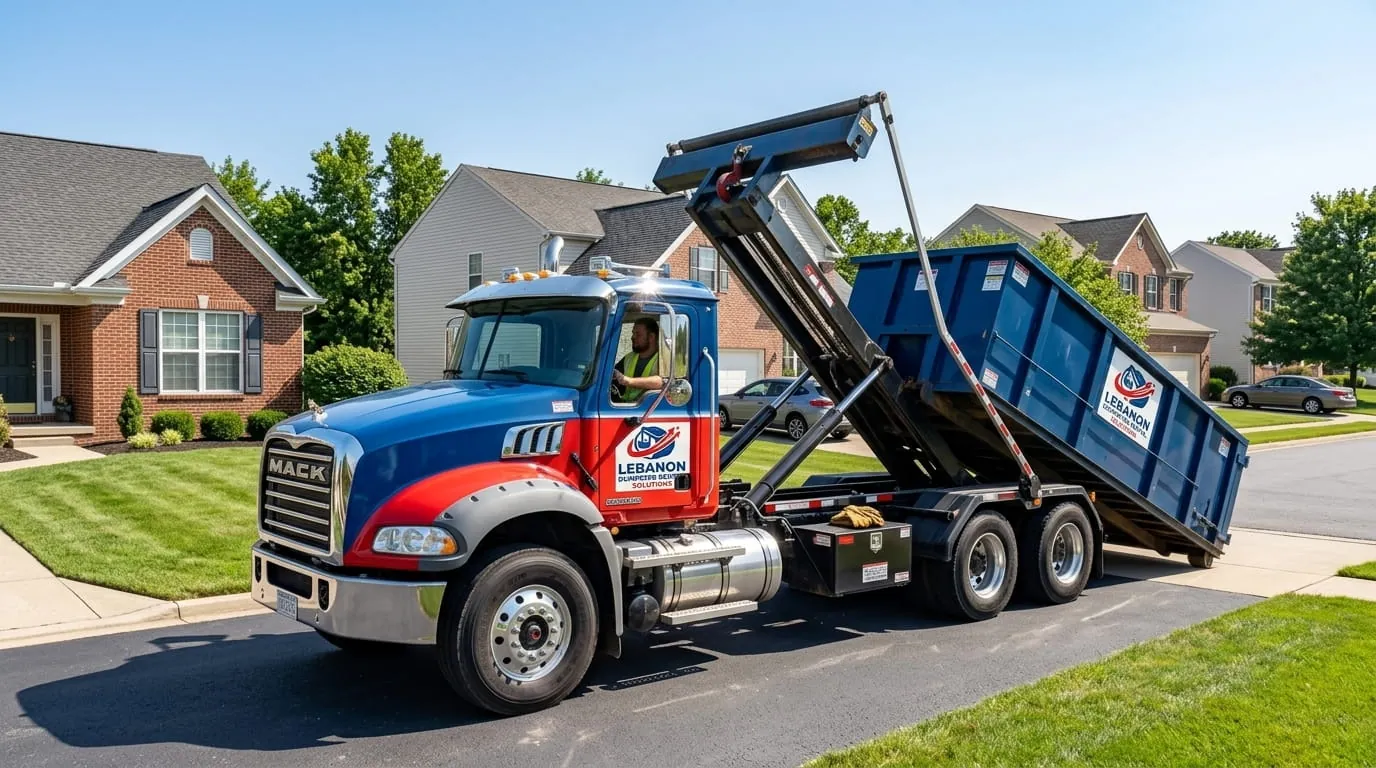
Construction and demolition (C&D) debris is one of the largest waste streams a builder in Wilson County has to manage, and how you handle it on the job site directly affects your budget, your schedule, and your standing with local haulers and inspectors. Whether you are gutting a kitchen in Lebanon, framing a subdivision off Highway 109, or tearing the roof off a commercial box, the debris you generate falls into predictable categories with very different disposal rules. Getting those rules right is the difference between a clean, profitable job and a container that gets refused, overweighted, or hit with contamination fees. This guide from Lebanon Dumpster Rental Solutions walks Middle Tennessee builders and remodelers through the entire process, from identifying waste types to keeping your paperwork compliant.
The Main Types of Construction & Demolition Debris
Before you can plan disposal, you need to know what you are actually throwing away. C&D waste is not one homogenous pile. Each material behaves differently in a container, weighs differently, and follows a different recycling and landfill path. On a typical Middle Tennessee remodel or new build you will encounter the following streams:
- Drywall (gypsum board): Lightweight but bulky, and a contamination concern. Gypsum can release hydrogen sulfide in wet landfill conditions, so many facilities want it kept reasonably clean and separate when possible.
- Lumber and wood framing: Dimensional lumber, plywood, OSB, trim, and pallets. Clean, untreated wood is highly recyclable and can be ground into mulch or biomass fuel. Pressure-treated and painted wood is handled differently.
- Concrete, block, and brick: The heaviest material on any site. Inert and fully recyclable as crushed aggregate, but its weight makes it a special-handling item that should almost never share a container with light C&D.
- Roofing debris: Asphalt shingles, felt, and tear-off. Dense and heavy, especially when a layer or two of old shingles come off wet. Shingles are recyclable into pavement in many markets.
- Siding: Vinyl, fiber cement, aluminum, and wood siding. Mixed density; some streams recycle cleanly, others are trash.
- Metal: Ductwork, wiring, flashing, rebar, and structural steel. Almost always worth separating because scrap metal has real resale value.
- Mixed trash and finishes: Insulation, carpet, fixtures, packaging, and the general debris that accumulates through a build.
Why You Separate Heavy Inert Debris
The single most important habit a contractor can build is separating heavy inert material, concrete, brick, block, asphalt, dirt, and rock, from everything else. There are two reasons, and both hit your wallet. First, inert debris is dense enough to max out a container's weight rating long before it fills the volume. A 20-yard box loaded with concrete can blow past legal road weight when it is barely a third full. Second, mixing inert material with light C&D ruins the recyclability of both streams. A load of clean crushed concrete has value; the same concrete buried under drywall and cardboard is just heavy trash. If your project involves foundation work, slab removal, or hardscape teardown, plan a demolition-debris approach that keeps those streams organized from day one.
For that reason, dedicated heavy-debris containers exist. These are typically smaller boxes, 10 or 12 yards, engineered to carry concentrated weight safely on Tennessee roads. If your project generates significant masonry, foundation removal, or hardscape demolition, plan for a separate heavy-debris bin from the start. Our concrete and heavy debris service is built specifically for this, and it will save you from the overage charges that come with loading dense material into a general C&D container.
Understanding Weight Limits and Overage Fees
Every roll-off container comes with a weight allowance included in the rental price, and every pound over that allowance is billed at a per-ton overage rate. This catches contractors off guard more than any other line item. A 30-yard box might be rated for 4 to 6 tons; that sounds like a lot until you realize a single pickup bed of wet concrete can weigh a ton on its own. The physics do not care how much room is left in the box. Once you hit road-legal weight, the hauler cannot legally transport it, and you will either pay to have material removed or eat a steep overage.
This is precisely why concrete, dirt, brick, and asphalt need dedicated bins with their own weight-appropriate pricing. When you keep the heavy stream isolated, you can fill a general debris box, drywall, lumber, roofing, siding, all the way to the fill line and still stay under weight, because those materials are light per cubic yard. If you are unsure how your material mix maps to container size and weight, talk it through before the box drops. Choosing between a 20-yard box and a 30-yard dumpster is as much about weight as it is about volume, and the right call depends on what you are actually throwing away.
What Actually Recycles
Diversion, keeping material out of the landfill, is not just an environmental talking point in Middle Tennessee; it is often cheaper and increasingly required on commercial and public work. Here is where the common C&D streams typically end up:
- Concrete, block, and brick: Crushed into recycled aggregate for road base and fill. One of the highest-value, easiest streams to divert.
- Clean wood: Ground into mulch, landscape product, or biomass fuel. Must be free of paint, treatment, and hardware to qualify.
- Metal: Scrapped and remelted. High value, always worth pulling.
- Asphalt shingles: Processed into hot-mix asphalt for paving in markets that accept them.
- Cardboard and clean packaging: Standard paper recycling.
- Drywall: Recyclable into new gypsum board or soil amendment where facilities exist, but it must be clean and separated.
The catch is contamination. A recycler pays for a clean stream and rejects a dirty one. If your clean-wood pile has drywall scraps and food wrappers in it, it becomes trash. Source separation, sorting material as you generate it rather than sorting a mixed pile later, is the only reliable way to hit real diversion numbers.
Job-Site Container Logistics
Good debris management is a logistics problem as much as a waste problem. Placement, timing, and container count all affect how smoothly a job runs. A few field-tested practices for Middle Tennessee sites:
- Stage containers for the workflow. Put the box where debris is generated, not where it is convenient to drop. Hauling scrap 200 feet across a muddy lot kills productivity.
- Protect the ground and the road. Roll-offs are heavy; on soft ground or a finished driveway, lay down plywood or boards to spread the load and prevent damage.
- Plan your swaps. On a phased project, schedule empty-and-return swaps around demolition milestones so work never stalls waiting on an empty box.
- Load evenly and under the fill line. Distribute weight across the floor of the container and never load above the top rail, an overloaded box cannot be legally hauled.
- Keep prohibited items out. No hazardous waste, no liquids, no tires, no appliances with refrigerant, and no electronics unless your hauler specifically accepts them.
For most active job sites, a dedicated construction container that stays on site through the build is far more efficient than repeated small hauls. Our construction dumpster rental service is set up for exactly this kind of ongoing project support, with swap-outs scheduled around your phases.
LEED, Diversion, and Documentation
If you are working on a LEED-certified project or a job with a contractual waste-diversion requirement, disposal becomes a documentation exercise, not just a logistics one. LEED awards points for construction waste management, typically for diverting a target percentage (often 50 to 75 percent) of C&D debris from the landfill by weight or volume. To earn those points you must prove it, which means keeping tickets, weigh receipts, and facility records for every load.
The practical implications for the field are straightforward: separate your streams so each has a documented recycling destination, work with a hauler who can provide weight tickets and diversion reports, and keep a simple log tying each container to its final disposition. Even on jobs without a formal LEED requirement, many Middle Tennessee general contractors now track diversion because it lowers disposal cost and strengthens bids. Building the paperwork habit on every job means you are ready when a client or spec demands it.
Staying Compliant in Middle Tennessee
Compliance covers a few distinct areas, and cutting corners on any of them creates liability. First, disposal facility rules: landfills and transfer stations in the region have specific prohibited-item lists and may require certain materials be pre-separated. Second, road weight limits: an overloaded roll-off is a legal problem for the hauler and a safety hazard, which is why weight ratings are enforced strictly. Third, hazardous and special waste: asbestos-containing materials, lead paint debris, and similar hazards fall under specific handling and disposal regulations and cannot go in a standard C&D box, if you suspect a hazard in an older Wilson County structure, get it tested and abated by a licensed specialist before demolition proceeds.
Finally, keep your documentation. In the event of any question about where material went, weight tickets and disposal receipts are your protection. A reputable local hauler makes this easy by providing clear records with every haul. For a full breakdown of what is and is not allowed in a container, our guide on what can go in a dumpster is a useful reference to keep on hand for your crews.
Putting It All Together
Effective construction debris disposal comes down to a handful of disciplines: know your waste streams, separate heavy inert material into dedicated bins, respect weight limits, keep recyclable streams clean, place and swap containers to match your workflow, and document everything. Do those things consistently and you turn debris management from a source of surprise costs into a predictable, even profitable, part of the job. Middle Tennessee builders who dial this in spend less on disposal, hit diversion targets without drama, and never get a container refused at the scale.
If you are planning a build, remodel, or demolition anywhere in Lebanon or the surrounding Wilson County area and want the right containers matched to your material mix, Lebanon Dumpster Rental Solutions can help you scope it correctly the first time. Call us at (615) 257-9262 to talk through your project and get the right roll-off on site, on schedule, and priced to keep your job moving.

Founder, Lebanon Dumpster Rental Solutions — sharing straight advice from more than 15 years of local hauling experience.
Frequently Asked Questions
Can I put concrete and brick in a regular construction dumpster?
It is strongly discouraged. Concrete, brick, and block are inert but extremely heavy, and mixing them into a general C&D container maxes out the weight limit fast and ruins the recyclability of both streams. Use a dedicated heavy-debris bin so you can recycle the clean masonry as aggregate and avoid steep overage fees.
Why do concrete and dirt need their own dedicated bins?
Because of weight. Dense inert material like concrete and dirt reaches road-legal weight long before it fills a container by volume, so a general box loaded with it cannot be legally hauled. Dedicated heavy-debris bins are sized and priced for concentrated weight, keeping you compliant and the material recyclable.
What construction materials actually get recycled?
Concrete and masonry (crushed into aggregate), clean untreated wood (mulch or biomass), metal (scrapped and remelted), asphalt shingles (reprocessed into pavement), cardboard, and clean drywall where facilities accept it. The key is keeping each stream separated and free of contamination so recyclers will take it.
How does dumpster weight overage pricing work?
Each roll-off includes a weight allowance in the rental price, and every ton over that allowance is billed at a per-ton overage rate. Heavy materials like concrete, roofing, and dirt hit the limit quickly, which is why separating them into weight-appropriate bins keeps your general debris box under the included allowance.
What do I need to document for LEED or waste diversion credit?
Keep weight tickets, disposal receipts, and facility records for every load so you can prove the percentage of debris diverted from the landfill by weight or volume. Separate your streams to give each a documented recycling destination, and work with a hauler who can provide clear diversion reporting.